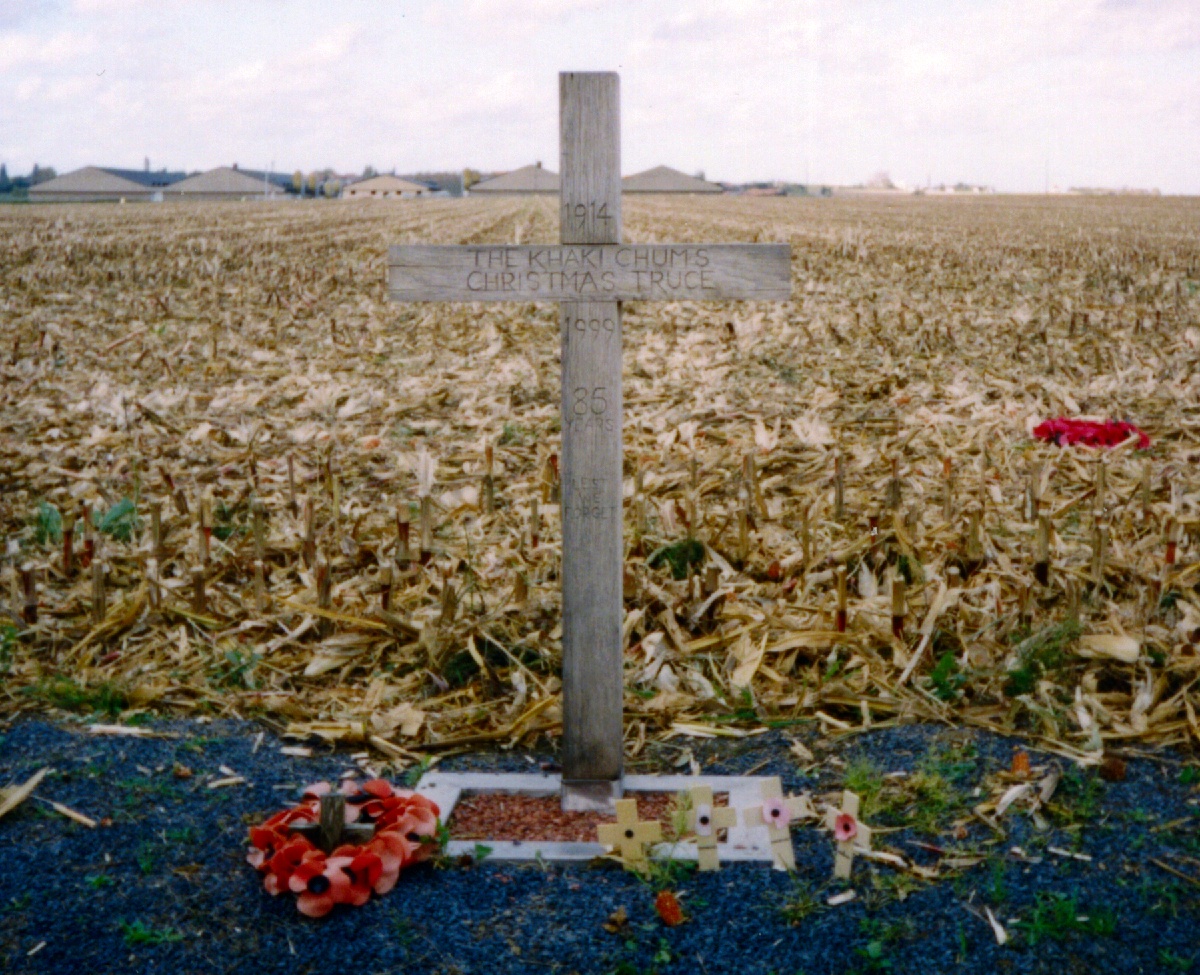
More than a century ago, in the bitter winter of 1914, something extraordinary broke through the mud and misery of the Western Front. In the first Christmas of the First World War, British and German soldiers laid down their rifles and stepped into the cold silence of No Man’s Land. What followed was one of the most moving moments in military history. A truce, not declared by generals or governments, but by ordinary men who simply longed for home.
Many people first heard of the Christmas Truce after it appeared in a well known Sainsbury’s Christmas advert a few years ago, but the real story carries far more depth, warmth and humanity than a single scene could ever show.
In the weeks leading up to Christmas 1914, there were early attempts to bring about some kind of official pause in the fighting. Pope Benedict XV, who had only been elected a month after the war began, appealed to the nations of Europe on 7 December, asking that the guns fall silent for Christmas so that peace might at least be given a chance. His request was heartfelt, but governments on both sides showed little appetite for a formal truce.
On the front lines, however, things were often very different. By Christmas Eve, some junior British officers had quietly advised their men to hold fire unless absolutely necessary. It was an early example of what later became known informally as “live and let live”, a practice that emerged in quieter sectors throughout the war when opposing troops recognised their shared hardship and allowed small gestures of restraint.
As dawn broke on Christmas Day, German soldiers began stepping out of their trenches, hands raised to show they meant no harm. They carried no rifles, no threat, only the simple wish to mark the day in peace. Seeing this, British soldiers cautiously climbed from their own lines, and soon both sides were gathered in the frozen stretch of No Man’s Land, talking, shaking hands and exchanging small gifts.
Rifleman Graham Williams of the London Rifle Brigade recalled hearing a familiar carol drifting across the lines:
"They finished their carol and we applauded them. Then we sang one and they applauded us. It was a celebration of Christmas in the midst of war."
Lieutenant Kurt Zehmisch of the German Army wrote:
"How marvelously wonderful, yet how strange it was. The English officers felt the same. We agreed there should be a truce today. This gave us an opportunity of getting to know each other."
Private Frederick Heath recounted the moment he saw German soldiers waving a simple Christmas message:
"A voice shouted from across the trench. It said: ‘We are not shooting tonight. We wish you a Merry Christmas’."
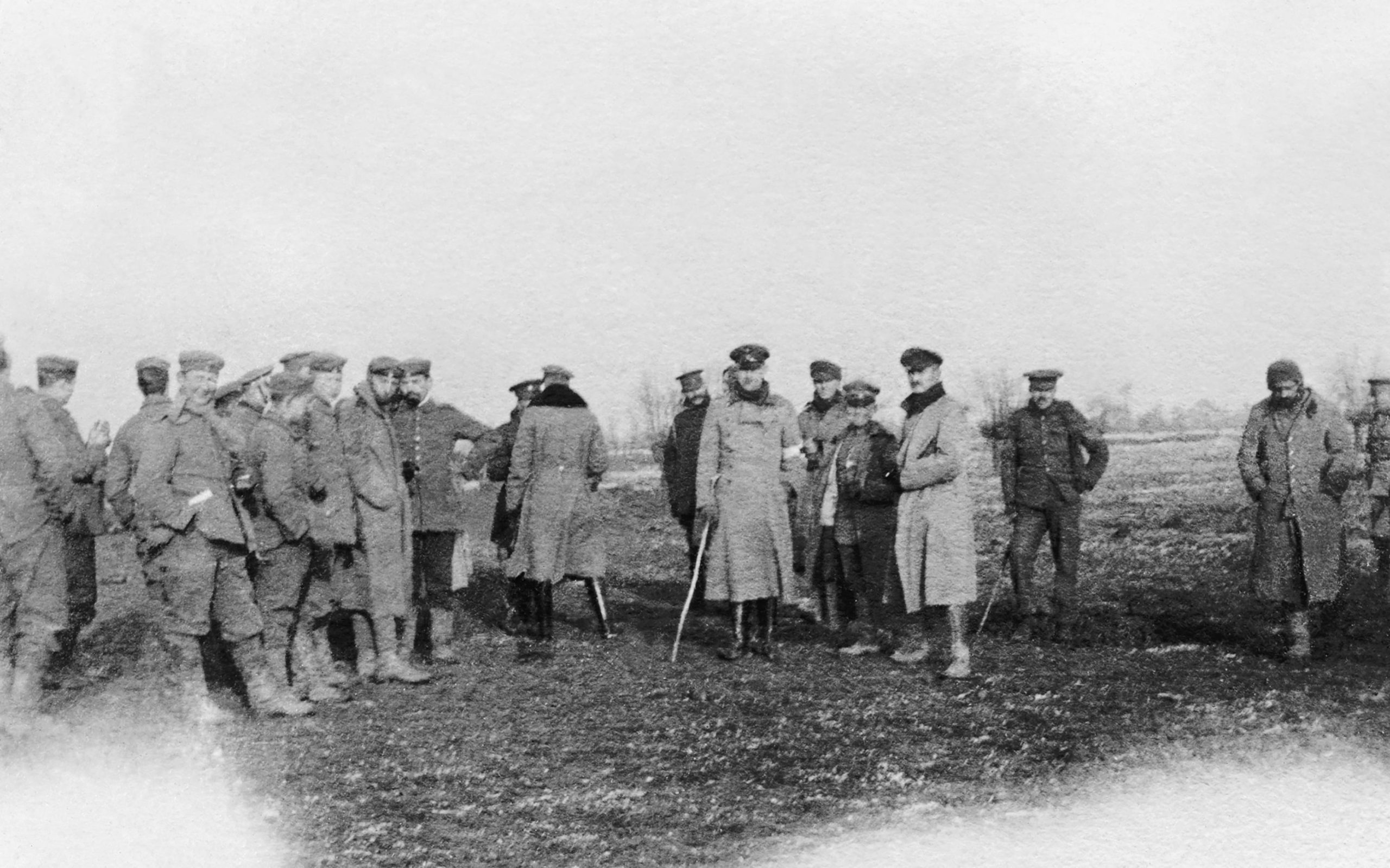
And yes, football did happen, although not in the neat, organised sense that people often picture. There was no marked pitch, no referee, no agreed sides. In many places soldiers simply kicked about a ball or whatever they had to hand, whether that was a proper leather football, an improvised bundle of rags or even an old tin. It was never about the score. It was about feeling, for a few fleeting minutes, like young men again instead of combatants.
Several accounts from both sides describe these moments. One German soldier wrote:
"The football match began. What a sight. English and Germans jumping about together. Not out to win, but simply to play."
Private Ernie Williams of the 6th Battalion Cheshire Regiment later recalled:
"There was no sort of ill will at all. There was no referee and no score. It was just a kickabout, nothing more, but it felt like a piece of home had found us."
In another sector, British officer Captain Robert Hamilton wrote that the ground was so frozen the ball bounced strangely, sending soldiers slipping and laughing in the mud. He added:
"It seemed the most natural thing in the world, yet wholly unreal. A moment that would never come again."
Some reports describe the Germans as having the better ball skills, with one British soldier joking that their opponents seemed far more used to proper boots and firmer pitches. In other areas, soldiers recalled playing until the ball burst or was lost in the churned mud between the trenches.
A few lesser known facts help to show just how remarkable the day truly was:
- The truce happened independently in dozens of small pockets along the front. Each one began with small gestures, such as singing, lanterns placed on trench parapets, or shouted greetings.
- Some soldiers used the ceasefire to bury the fallen who lay between the trenches, performing joint services spoken in both English and German.
- Many men exchanged small gifts. Cigars, puddings, newspapers, postcards, buttons, coffee, chocolate and tins of bully beef changed hands.
- Some soldiers swapped addresses, hoping to write to one another after the war.
- In certain areas the truce stretched on beyond Christmas Day until officers intervened, worried about discipline and morale.
The Christmas Truce was not universal and it did not last long, but its meaning endures. It showed that even in a world torn apart by conflict, humanity can still shine through the cold. For a few precious hours, men who had been strangers, and who had been ordered to see each other as enemies, recognised something far deeper. Shared values. Shared hopes. Shared longing for home at Christmas.
As we look towards Christmas today in Pudsey and Farsley, the story still speaks with power. Families gathering round the table. Empty chairs that remind us of loved ones no longer with us. Messages sent to those serving overseas. Moments of togetherness that mean more than we sometimes realise.
The mission of the Royal British Legion continues that spirit. We support serving personnel, veterans and their families, especially at times of year when absence, memory and sacrifice feel hardest. We ensure that those who serve are never forgotten. We bring communities together in acts of remembrance that honour the past while supporting those who carry the legacy of service in the present.
Just as those soldiers reached across No Man’s Land in 1914, today we reach across communities to support, remember and care. Christmas is a time to reflect, to give thanks and to think of those who cannot be home. It is also a time to recognise the enduring values that the Christmas Truce symbolised. Compassion. Understanding. Peace.
As the year comes to a close, may we carry those same values with us, honouring the men who shared a fragile moment of peace on a winter’s day over a century ago, and honouring all who continue to serve so that others may enjoy the simple comforts that Christmas brings.
Finally, as we approach Christmas, we would like to offer our heartfelt thanks to everyone who has supported our mission throughout the year. Whether you purchased a poppy, attended a service, shared a kind word, or simply took a moment to acknowledge the work of our volunteers, your support makes a real difference. It allows remembrance to remain at the heart of our community and ensures that those who serve are never forgotten. From all of us at the Royal British Legion Pudsey and Farsley Branch, thank you.
We hope you all have a very Merry Christmas and a wonderful New Year.